The grid is changing faster than it looks
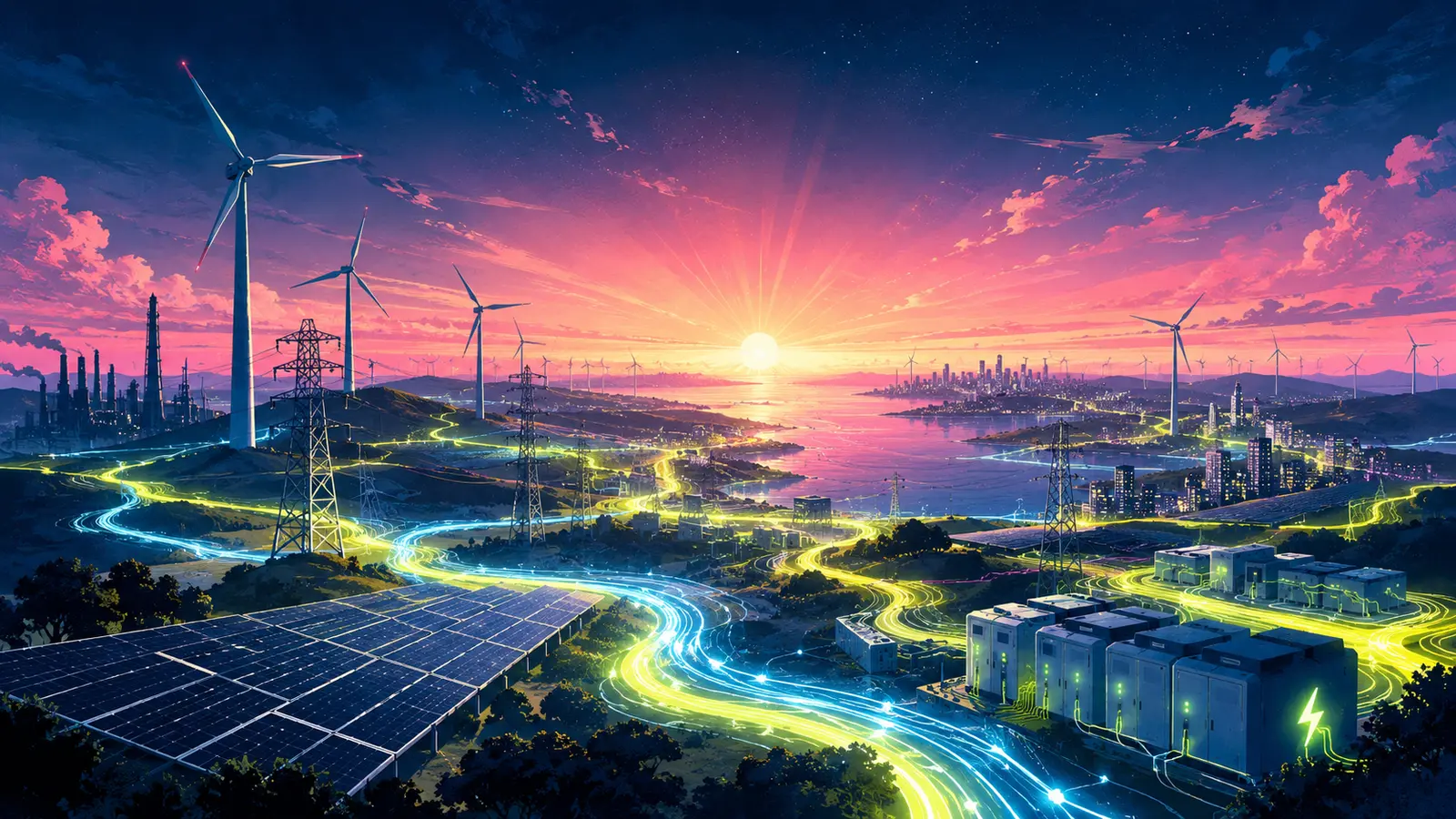
Good news rarely arrives with a clean ending. More often, it appears as a trend that has survived another year: a little faster, a little cheaper, and a little harder to reverse.
That is what is happening with renewable energy.
In 2025, the world added 692 gigawatts of renewable power capacity, according to the International Renewable Energy Agency. That was a 15.5 percent increase in a single year and brought the global total to 5,149 gigawatts. More strikingly, renewables accounted for 85.6 percent of all new power-generating capacity added during the year.
This is not a distant promise or a demonstration project. It is steel, silicon, wiring, financing, construction, and millions of individual decisions that have already happened.
The difference between capacity and electricity
Energy statistics can be slippery, so the first caveat matters. Capacity measures how much electricity equipment could produce under the right conditions. It is not the same as the electricity actually generated. A solar farm does not run at full output after sunset, and a wind turbine waits for the wind.
Even so, the generation numbers are moving in the same direction.
The International Energy Agency’s Global Energy Review reports that renewables supplied 34 percent of global electricity in 2025, up from 32 percent in 2024 and 23 percent a decade earlier. Wind and solar alone supplied 17 percent, compared with about 5 percent ten years ago.
That is a meaningful change in the physical machinery of civilization. Electricity demand continued to grow in 2025, yet renewable and nuclear generation together increased by more than total demand. Fossil-fuel generation declined, and coal-fired generation fell by about half a percent, the first decline outside a global crisis since 2015.
One year does not make a permanent victory. It does, however, show that rising electricity use does not automatically require rising fossil-fuel generation.
Records are becoming routine
The most encouraging part of this story may be its repetition.
The IEA says 2025 was the 23rd consecutive year of record renewable-capacity growth. Solar supplied more than three-quarters of the year’s additions, while wind contributed about one-fifth.
Twenty-three consecutive records stop looking like a temporary enthusiasm. They look like a system learning how to build something.
Each year of deployment expands supply chains, trains more workers, gives lenders more data, and leaves behind ports, factories, transmission lines, and technical knowledge that can support the next year. Progress is not automatic, but it can become self-reinforcing.
There is also a psychological advantage to repetition. A technology that once looked experimental becomes ordinary. A solar panel becomes another building material. A battery becomes another piece of grid equipment. A wind farm becomes infrastructure rather than an argument about whether the technology works at all.
A milestone within reach
The IEA now expects renewable generation to overtake coal-fired generation in 2026, after the two were nearly level in 2025. That is a forecast, not a fact, and forecasts can be wrong. Weather, economic growth, policy changes, grid bottlenecks, and fuel prices can all move the result.
Still, even being close enough for the crossover to depend on the details would have sounded implausible not long ago. Coal has been the world’s largest source of electricity for generations. Renewables are no longer merely growing around the edges of that system; they are beginning to reorder it.
The transition is uneven. Asia accounted for nearly three-quarters of new renewable capacity in 2025, while some regions added far less. New power plants also need transmission, storage, flexible demand, and faster connection queues. Clean generation must grow rapidly for many more years, and existing fossil infrastructure will not disappear on its own.
Good news does not require pretending the unfinished work is finished.
It only requires recognizing a real improvement while it is happening.
The quiet kind of hope
Climate change is often described through thresholds, deadlines, and disasters. Those things are real, but they can make progress feel binary: either the problem is solved, or nothing counts.
Infrastructure does not change that way. It changes project by project, factory by factory, and year by record-breaking year. For a long time, the individual additions seem too small to alter the whole. Then the cumulative result becomes visible in the global totals.
In 2025, more than five out of every six units of new power capacity were renewable. Clean sources supplied a larger share of actual electricity. Coal generation edged down even as demand rose. And the world’s largest source of electricity may be overtaken by renewables this year.
None of this guarantees a safe climate or an easy transition. It does mean the tools for building a cleaner power system are being deployed at a scale the world has never reached before.
That is good news: not because the work is over, but because the work is working.